
Pathology Software India : Digital Workflow Guide for Diagnostic Centres
Step-by-step guide to running a paperless diagnostic centre in India — reusable findings templates, A4 PDF report generation, QR-based verification and instant WhatsApp delivery for pathology, X-Ray and ECG reports.
 Anil KumarHealthcare IT Consultant1 May 20262 min read
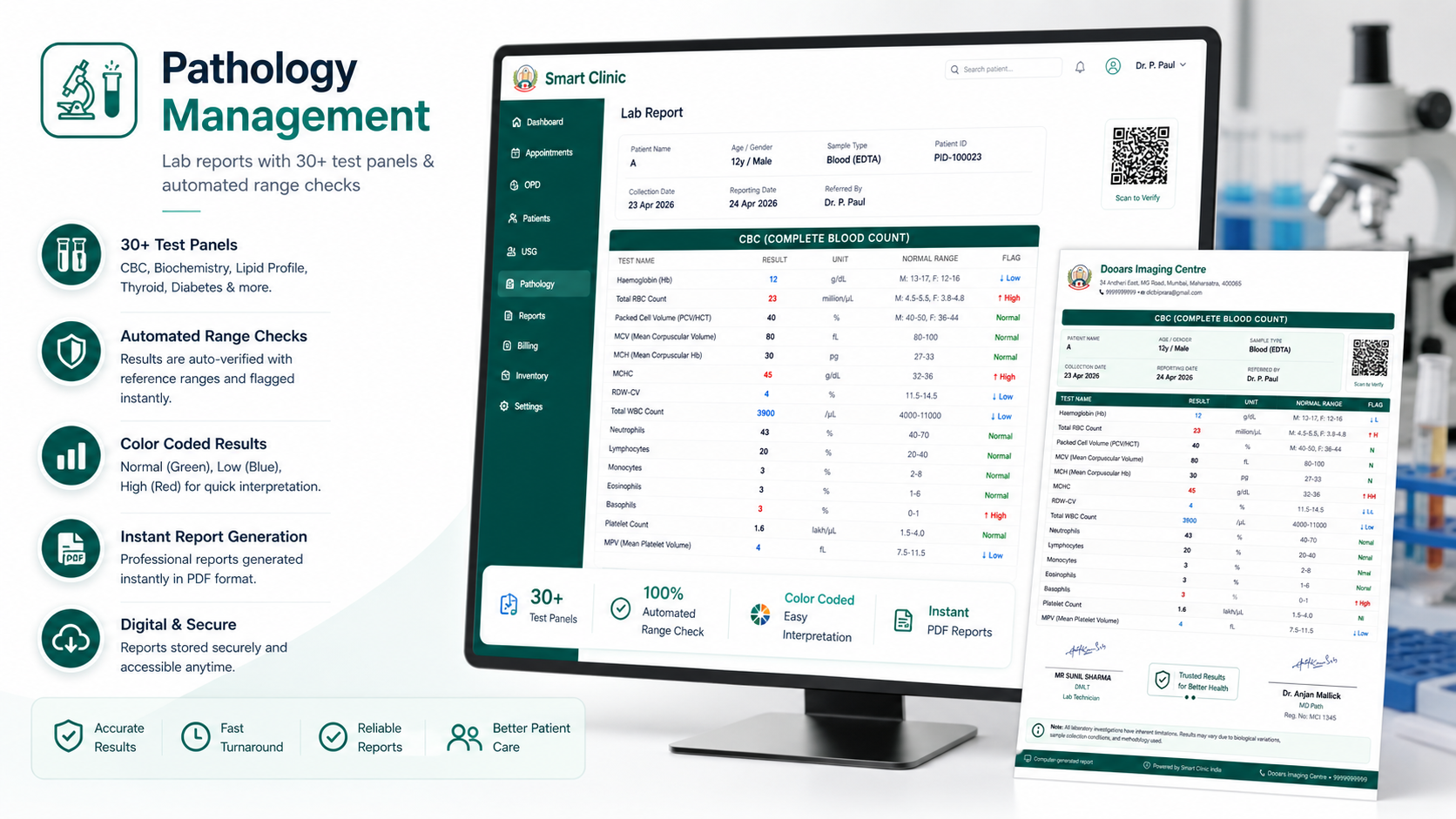
Most diagnostic centres in India still hand-write reports, photocopy them and hand them to patients in a plastic folder. This is slow, error-prone, and impossible to verify later. In this guide we walk through the exact digital workflow used by modern Indian pathology labs, X-Ray rooms and ECG centres — from sample registration to a verified A4 PDF report on the patient’s WhatsApp.
1. The 5-stage diagnostic workflow
- Patient registration — capture name, age (Days/Months/Years), phone and referring doctor. A unique per-bill registration ID is generated automatically alongside a permanent patient UID.
- Sample collection / imaging — print a barcoded sample slip so the lab and reception are always in sync.
- Findings entry — the technician or radiologist picks a reusable findings template and edits only the values that change.
- Doctor verification — the report is signed digitally with a verification badge before release.
- Delivery — A4 PDF is generated, sent on WhatsApp using a public verification link, and the file is deleted from storage immediately after transmission.
2. Reusable findings templates
The biggest time-saver in any pathology lab is a good template library. Rather than typing “Within Normal Limits” one hundred times a day, save common findings as templates per test (CBC, LFT, KFT, Lipid Profile, Thyroid, X-Ray Chest PA, ECG 12-lead, etc.). Templates should support tabular results with reference ranges, method/specimen fields, multiple sections (Findings, Impression, Advice) and one-click QuickFill so the technician edits only the abnormal values.
3. A4 PDF report generation
Indian referring doctors expect a clean, printable A4 layout. Make sure your reports include the clinic logo, address and accreditation numbers; a patient details block with registration ID, age and gender; test parameters with results, units and biological reference ranges; doctor signature with an emerald-coloured Verified badge; and a QR code linking to a public verification URL — no login required.
4. QR-based report verification
Anyone scanning the QR code on a printed report should be able to confirm authenticity instantly. This is especially valuable for pre-employment medicals, insurance claims and visa applications, where fake reports are a real problem. The verification page should be public, mobile-friendly, and never require sign-in.
5. WhatsApp delivery with send-and-delete
Once the PDF is generated, upload it to temporary storage, send the link via WhatsApp, then purge the file. This protects patient privacy and keeps storage costs near zero — a critical pattern when running a diagnostic centre at scale.
6. Specialised hubs vs the appointment book
Keep logistics (booking, queue, payment) inside the Appointments module, but move the clinical work (findings entry, report generation) into dedicated Pathology, X-Ray and ECG management hubs. This separation keeps the receptionist’s screen simple and the technician’s screen powerful.
Conclusion
A digital diagnostic workflow is no longer a luxury — it is the cheapest and fastest way to scale an Indian pathology lab or imaging centre. Templates eliminate typing, QR codes eliminate fraud, and WhatsApp delivery eliminates the front-desk queue at 6 PM.
Image gallery
Tap any image to preview at full size.
Run your clinic with SmartClinic India
All-in-one clinic management software with OPD, IPD, pharmacy, billing & WhatsApp automation. Free 7-day trial.
Start Free TrialRelated articles
Healthcare IT Consultant
The Smart Clinic India editorial team writes about clinic management, GST billing, pharmacy, and digital healthcare best practices for Indian clinics and hospitals.