
Pharmacy Management for Indian Clinics: CSV Import, Batch Tracking & Online Store
Run a profitable pharmacy inside your Indian clinic — zero-cost CSV stock import, batch and expiry tracking, per-item GST/HSN billing, prescription-to-sale conversion and a public online store with COD orders.
 Anil KumarHealthcare IT Consultant1 May 20268 min read
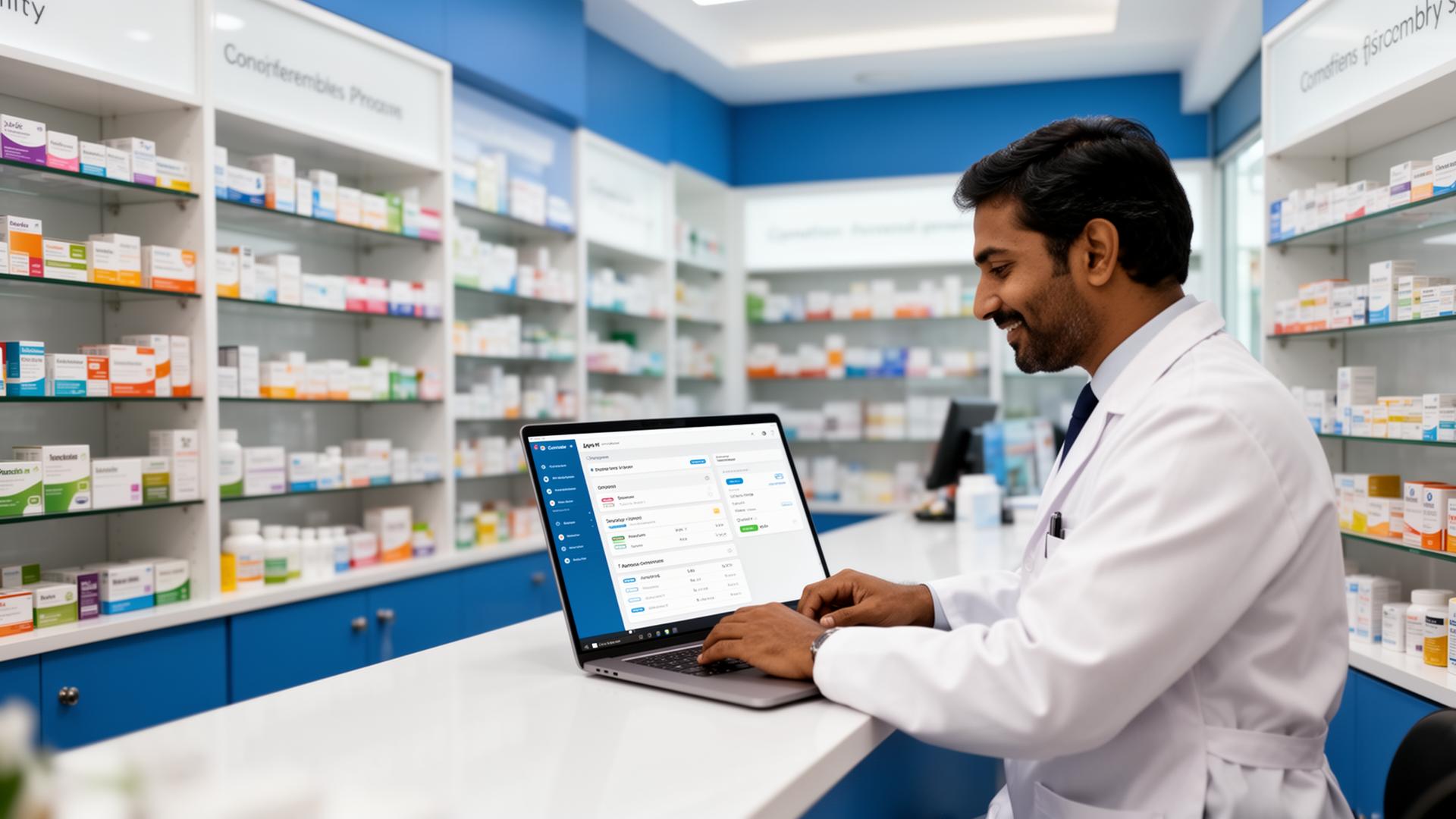
An in-house pharmacy can transform a clinic’s economics — but only if the software stays out of the pharmacist’s way. This guide covers the operational patterns that work for Indian clinics and standalone chemist shops in 2026.
1. CSV stock import done client-side
Most pharmacy software charges per AI call to parse stock files. This is unnecessary. A simple client-side CSV parser handles 95% of distributor invoices for free, with no AI cost. Keep AI strictly for things that genuinely need it (like enhancing a clinic logo) and parse routine CSVs in the browser.
2. Batch and expiry tracking
Every medicine batch must carry batch number and manufacturing date; expiry date with an automated alert 90 days before expiry; MRP, purchase price and current stock quantity; and HSN code with GST percentage. When a sale happens, the system should pick the nearest-expiry batch first — classic FEFO (First Expiry, First Out) — to minimise wastage.
3. Per-item GST and HSN billing
Unlike OPD consultations where GST applies once, pharmacy sales need GST per line item. Different medicines fall under different GST slabs (5%, 12%, 18%). The invoice must show HSN, GST% and tax amount on every line; snapshot the values onto the sale row, never re-read from the medicine master afterwards; and print a clean tax summary at the bottom (CGST + SGST or IGST).
4. Prescription to sale in two clicks
A patient’s OPD prescription should pre-fill the pharmacy bill. The system reads each medicine line, calculates the total quantity needed from the dosage and duration (e.g. “1-0-1 for 5 days” = 10 tablets), and adds it straight to the cart. This single feature removes 90% of typing errors at the pharmacy counter.
5. Duplicate medicine analyser
After a few months of CSV imports, the medicine master fills up with near-duplicates: Crocin 500, Crocin-500, CROCIN 500MG. A tiered duplicate analyser (exact match → normalised name → salt+strength) lets the pharmacist merge them safely without losing batch history.
6. Public online store with COD
Every clinic pharmacy in India can now run a public storefront at /store/<slug> for guest customers — no login needed. Customers browse, add to cart, and place a cash-on-delivery order. The pharmacy receives a real-time order alert and prepares the parcel. This is the cheapest way for a single-doctor clinic to enter online medicine retail.
7. WhatsApp delivery of bills
After the sale, the GST invoice PDF should go out on WhatsApp to the customer’s registered number. Use the same send-and-delete protocol used for medical reports: upload, send, purge. Storage stays small, privacy stays high.
Conclusion
An Indian clinic pharmacy can run with negligible software cost if you keep AI out of routine parsing, snapshot tax data onto every sale, and let the prescription flow straight into the cart. Add a simple online store and you have a small e-commerce business attached to your OPD.
Image gallery
Tap any image to preview at full size.
Run your clinic with SmartClinic India
All-in-one clinic management software with OPD, IPD, pharmacy, billing & WhatsApp automation. Free 7-day trial.
Start Free TrialRelated articles
Healthcare IT Consultant
The Smart Clinic India editorial team writes about clinic management, GST billing, pharmacy, and digital healthcare best practices for Indian clinics and hospitals.